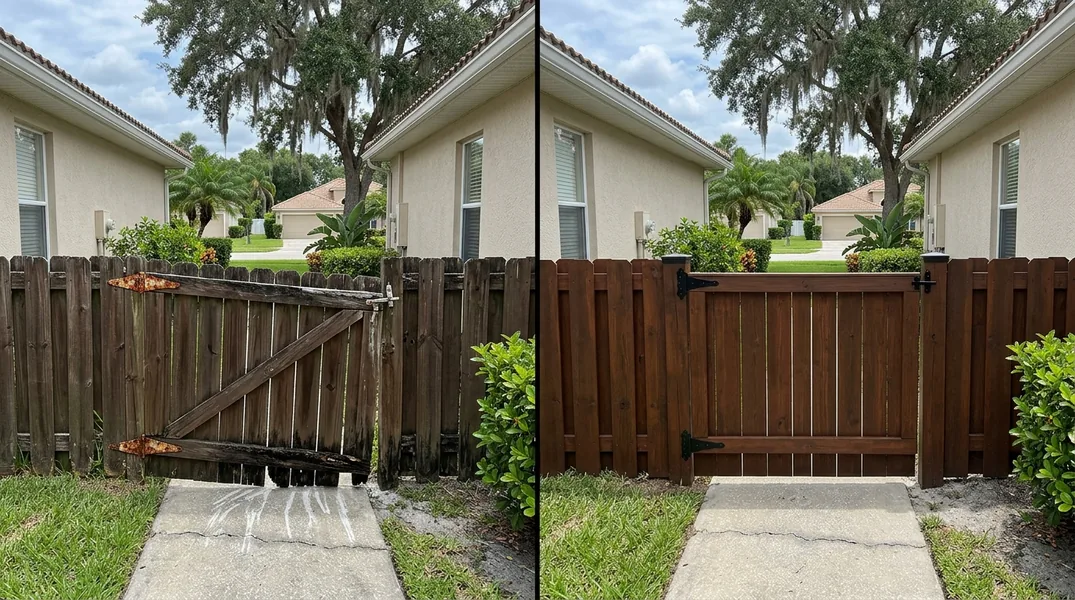
Understanding Hurricane-Rated Fences in Florida
Living in Orlando means understanding that hurricane season is not a matter of if, but when. Every homeowner in Central Florida faces the reality that a major storm could impact their property at any moment. Your fence is often the first line of defense for your home's perimeter, and choosing the right hurricane-rated fence can mean the difference between a fence that survives the season intact and one that becomes a liability during high winds.
A hurricane-rated fence is specifically engineered to withstand significant wind loads without structural failure. These fences are designed and installed according to strict engineering standards that account for the extreme pressures that tropical storms and hurricanes generate. The term "hurricane-rated" doesn't mean a fence is indestructible, but rather that it has been tested and certified to perform safely under specific wind speed conditions. Understanding what makes a fence hurricane-rated is the first step toward protecting your Orlando property.
Wind Load and Fence Wind Resistance: What the Numbers Mean
When engineers talk about fence wind resistance, they're measuring how much force a fence can withstand before it fails. This force is expressed as wind load, typically measured in pounds per square foot (psf). A fence rated for 115 mph winds, for example, has been tested to remain standing when exposed to sustained winds at that speed. However, the actual wind load calculation is more complex than just the wind speed. Engineers factor in the height of the fence, the spacing of posts, the material thickness, and the soil conditions where the fence is installed.
In Orlando, most residential fences should be designed to handle at least 130 mph wind loads based on current Florida building codes. This means the fence panels, posts, and hardware must all work together as a system to resist the lateral forces that wind creates. A fence that looks solid but has weak connections or improperly spaced posts will fail long before one that has been engineered with proper bracing, reinforced posts, and heavy-duty hardware. The wind load rating is only meaningful if every component of the fence meets that same standard.
Florida Building Code Requirements for Fence Wind Resistance
The Florida Building Code sets specific requirements for fences in hurricane-prone areas, and these requirements are stricter than codes in most other states. The code requires that residential fences in Florida be designed to withstand wind speeds based on the specific location within the state. Contact Orlando Fence Company for guidance on your specific property's requirements, as wind speed zones can vary even within neighborhoods.
Key elements of the Florida Building Code for fences include minimum post spacing (typically 6 feet for residential fences), minimum post diameter and depth (usually 4x4 posts set 3 feet deep), and specific requirements for how panels are attached to posts. The code also specifies that fasteners must be corrosion-resistant, which is critical in Florida's humid, salt-laden environment. Many homeowners don't realize that a fence installed without attention to these code requirements is not only unsafe but also likely to fail during a hurricane. When you invest in Wood & Privacy Fence Installation in Orlando, ensuring that your installer understands and follows Florida Building Code is essential.
Material Comparison: Which Fences Actually Hold Up to Hurricanes
Different fence materials perform differently under hurricane-force winds. Wood & Privacy Fence Installation can be hurricane-rated if the wood is properly treated, the posts are correctly installed, and the design includes adequate bracing. Pressure-treated pine and cypress are common choices in Florida because they resist rot and insect damage. However, solid wood panels create significant wind load, so some designs include horizontal slats with spacing to allow wind to pass through, reducing the overall pressure on the structure.
Vinyl & PVC Fence Installation has gained popularity in recent years because vinyl doesn't rot and requires minimal maintenance. High-quality vinyl fences can be engineered to meet hurricane wind ratings, though vinyl panels are more flexible than wood and may move slightly in extreme winds without breaking. Chain Link Fence Installation is excellent for wind resistance because the open mesh design allows wind to pass through rather than creating pressure against the fence. Chain link rarely fails due to wind alone, though the posts and connections must still be properly installed. Aluminum & Ornamental Iron Fencing offers both aesthetic appeal and strong wind resistance when properly engineered, though ornamental designs with solid panels may not perform as well as simpler designs that allow wind passage.
Installation Practices That Ensure Your Fence Survives Hurricanes
The best hurricane-rated fence design is only as strong as its installation. Post depth is critical, and Florida Building Code requires that residential fence posts be set at least 3 feet deep in most cases. The deeper the post, the more resistance it provides against lateral movement from wind forces. Posts should be set in concrete, not simply backfilled with soil, to ensure they remain stable over time. The concrete should extend several inches above ground level to prevent water from pooling around the base of the post, which would accelerate rot and weaken the structure.
Post spacing also matters significantly. While 6-foot spacing is allowed by code, closer spacing (4 to 5 feet) provides additional support and reduces the wind load on each post. The way panels are attached to posts is equally important. Rather than relying on a few nails or screws, hurricane-rated installations use multiple fasteners spaced closely together, and the fasteners themselves must be corrosion-resistant stainless steel or galvanized hardware. Bracing between posts, either diagonal or horizontal, adds rigidity to the fence and helps distribute wind loads more effectively. When you're planning a new fence installation in Orlando, discussing these details with your installer is crucial to ensuring your fence will perform as intended during hurricane season.
Hurricane-Rated Fence Cost in Orlando: What to Budget
The pricing for a hurricane-rated fence is higher than a standard fence, but the investment protects your property and may reduce insurance costs. A properly engineered and installed fence that meets Florida Building Code requirements will cost more upfront than a fence installed without those considerations, but it will also last longer and provide genuine protection during storms. Factors that affect cost include the material you choose, the height of the fence, the length of the fence line, soil conditions on your property, and the specific wind rating required by your local building department.
Wood fences tend to be less expensive initially than vinyl or aluminum, but they require regular maintenance to remain effective. Vinyl fences cost more upfront but have lower lifetime costs because they don't need painting or staining. The actual difference in cost between a standard fence and a hurricane-rated fence often comes down to engineering, post installation depth, and hardware quality rather than the material itself. To get an accurate estimate for your specific property and needs, request a free estimate from Orlando Fence Company. You can also call us at (689) 400-2205 to discuss your project and get a better understanding of what hurricane-rated fencing will cost for your home.
Looking for a professional fence contractor in Orlando? Orlando Fence Company responds fast for all your fence needs.
Get a Free Quote